COHERENT manpages
This page displays the COHERENT manpage for strncpy() [Copy one string into another].
List of available manpages
Index
strncpy() -- String Function (libc)

Copy one string into another
#include <string.h>
char *strncpy(string1, string2, n)
char *string1, *string2; unsigned n;

strncpy()  copies  up to  n  bytes  of string2  into  string1, and  returns
string1. Copying ends when strncpy()  has copied n bytes or has encountered
a  null  character, whichever  comes  first.   If string2  is  less than  n
characters in length,  strncpy() pads string1 to length n  with one or more
null bytes.

Example

This example, called  swap.c, reads a file of names,  and changes them from
the format

    first_name  [middle_initial] last_name

to the format

    last_name, first_name [middle_initial]

It demonstrates strncpy(), strncat(), strncmp(), and index().

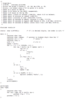
#include <stdio.h>
#include <string.h>
#include <stdlib.h>
#define NNAMES 512
#define MAXLEN 60

char *array[NNAMES];
char gname[MAXLEN], lname[MAXLEN];

main(argc, argv)
int argc; char *argv[];
{
    FILE *fp;
    register int count, num;
    register char  *name, string[60], *cptr, *eptr;
    unsigned glength, length;

    if (--argc != 1) {
        fprintf (stderr, "Usage: swap filename\n");
        exit(EXIT_FAILURE);
    }

    if ((fp = fopen(argv[1], "r")) == NULL)
        printf("Cannot open %s\n", argv[1]);
    count = 0;

    while (fgets(string, 60, fp) != NULL) {
        if ((cptr = index(string, '.')) != NULL) {
            cptr++;
            cptr++;
        } else if ((cptr = index(string,' ')) != NULL)
            cptr++;

        strcpy(lname, cptr);
        eptr = index(lname, '\n');
        *eptr = ',';

        strcat(lname," ");
        glength = (unsigned)(strlen(string) - strlen(cptr));
        strncpy(gname, string, glength);

        name = strncat(lname, gname, glength);
        length = (unsigned)strlen(name);
        array[count] = malloc(length + 1);

        strcpy(array[count],name);
        count++;
    }

    for (num = 0; num < count; num++)
        printf("%s\n", array[num]);
    exit(EXIT_SUCCESS);
}

See Also

libc,
strcpy(),
string.h
ANSI Standard, §7.11.2.4
POSIX Standard, §8.1

Notes

string1 must point to enough space  to n bytes; otherwise, a portion of the
program or operating system may be overwritten.